Eating the right foods can make a real difference when I want my body’s defenses to work well. Superfoods are popular for good reason; they pack high levels of nutrients in each bite and often come with unique compounds that help the immune system work smoothly. After spending time learning about nutrition and trying out different foods to stay healthy all year, I’ve found a lot of useful advice and experience to share on this topic. In this article, I’ll walk you through 10 superfoods that can give your immune system a natural lift and help keep you feeling your best.
The Basics: Why Superfoods Matter for Immune Health
The immune system has a tough job. It works nonstop to guard me against germs, viruses, and other invaders. What I eat feeds this system. Superfoods aren’t magic, but they are simply nutrientdense foods that bring in vitamins, minerals, antioxidants, and plant compounds. These nutrients help my immune system identify threats and recover faster when I do get sick. The steady rise in people searching for ways to stay healthy, especially during cold and flu season, shows just how important food choices have become in daily life. Investing in nutritious foods is a real step toward long-term wellness.
Quick Introduction to Immune-Boosting Nutrients
Some nutrients show up again and again when it comes to immune function:
- Vitamin C: Helps protect cells, supports healing, and helps white blood cells do their job.
- Vitamin D: Helps manage the body’s immune response, especially during winter when sunlight is scarce.
- Zinc: Plays a big role in cell growth and immune cell function.
- Antioxidants: Slow down cell damage that can weaken the immune system.
- Fiber: Supports gut health, which is closely tied to how well my immune system works.
Eating a mix of different superfoods allows me to cover these nutrients without relying only on supplements.
10 Superfoods That Can Boost Your Immune System
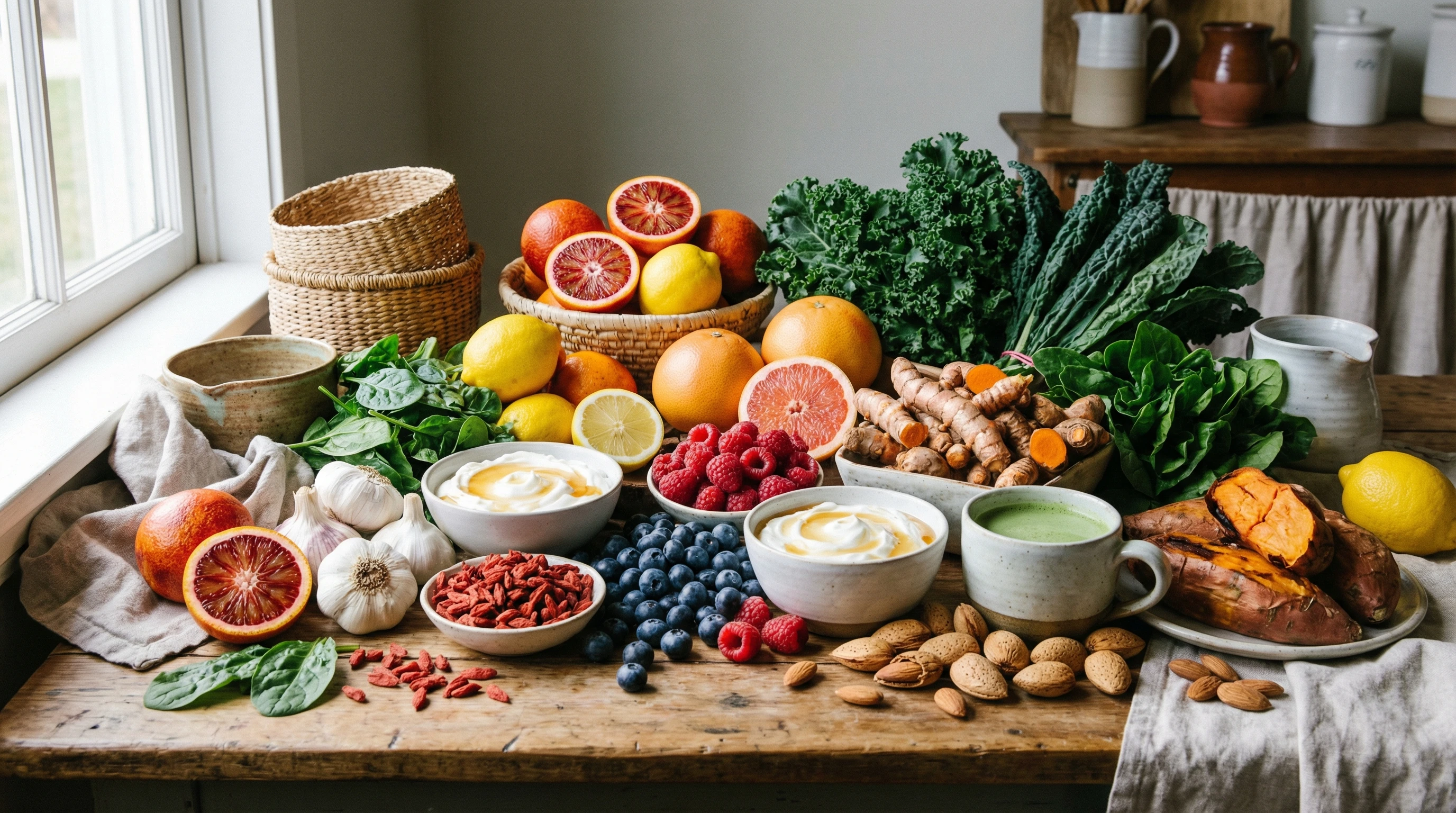
So, here’s my list of foods that I always keep in my pantry for immune support based on what I’ve learned, eaten, and recommended over the years. Over time, adding new options to my grocery cart has made eating healthy a lot more enjoyable.
- Citrus Fruits (Oranges, Grapefruits, Lemons, Limes): These are a staple for their high vitamin C content. Drinking orange juice or adding lemon to water isn’t just tasty; it’s a simple way to support my immune system daily. I’ve noticed less downtime from illness when I regularly eat them.
- Garlic: Used in cooking for thousands of years, garlic contains allicin, a compound that supports the immune response and helps fight off germs. I add garlic to sauces, soups, and stews, especially in winter. The warming aroma alone makes meals feel more comforting.
- Ginger: Ginger is a warming root that brings antiinflammatory and antioxidant effects. When my throat feels scratchy or my energy drops, I slice fresh ginger into hot tea. This classic remedy makes a real difference for me, and I also love it grated into stirfries for a boost of both flavor and nutrition.
- Spinach: Spinach is loaded with vitamin C, beta carotene, and antioxidants. Raw or lightly sautéed, it’s easy to toss into smoothies, salads, and omelets. I try to keep a bag of fresh or frozen spinach on hand for quick, healthy meals.
- Yogurt: A healthy gut often means better immunity. Yogurt with “live and active cultures” helps the gut produce good bacteria, which plays a crucial part in fighting off infections. I pick plain yogurt and mix in my own fruit or a drizzle of honey for more control over sugar content.
- Berries (Blueberries, Strawberries, Acai): Berries are tiny, colourful fruits packed with antioxidants called flavonoids. They help shield the body from oxidative stress. I snack on them fresh or frozen all year round and often add them to salads and oatmeal. The natural sweetness beats most desserts.
- Almonds: Almonds deliver vitamin E, a powerful antioxidant, along with healthy fats and protein. A handful makes for an easy snack or can be sprinkled on salads for extra crunch and nutrition. Sometimes, I use almond butter in smoothies for a silky texture and a nutrient kick.
- Sweet Potatoes: These are high in beta carotene, which turns into vitamin A in the body. Vitamin A helps keep skin and the lining of my organs strong, which acts as the first defense against illness. I roast sweetpotatoes in batches and add them to grain bowls, soups, or just eat them on their own.
- Turmeric: This bright yellow spice brings a compound called curcumin that benefits both the immune and anti-inflammatory processes. I’ve found that sprinkling turmeric into rice, soups, or lattes is both simple and tasty. You can also pair it with black pepper to boost absorption.
- Green Tea: With plant compounds called catechins, green tea helps protect cells and supports immune health. I usually swap my afternoon coffee for green tea when I need a gentle boost and want to lower my caffeine intake. Sometimes, I chill green tea and blend it into smoothies for something different.
What to Know Before Adding Superfoods to Your Diet
Superfoods can make a positive difference, but there are a few things I keep in mind before loading up my plate:
- Balance: Eating only one food, even a so-called “superfood,” won’t do the job. A balanced, varied diet gives the immune system the tools it needs day after day. I love mixing things up across the week to keep meals interesting and my body fueled with lots of nutrients.
- Allergies and Sensitivities: Some common superfoods like almonds and yogurt can trigger reactions in some people. Checking food labels and starting with small amounts helps if I’m trying something new. When in doubt, I check in with a registered dietitian or doctor for advice.
- Sugar Content: Berries are healthy, but flavored yogurts or juices can hide a lot of added sugar, which isn’t so great for overall health. I go for plain yogurt and whole fruits to avoid the sugar spike. Reading labels is a habit worth building.
Storage and Preparation
Fresh foods deliver the most nutrients, but not every superfood has to be fresh. Frozen berries and spinach work well for smoothies. Garlic can be kept for weeks in a cool, dry spot. Storing foods correctly and mixing up preparation methods keep things interesting and help reduce food waste at home. Prepping big batches of roasted veggies or washing greens ahead helps me eat healthy even on busy days.
Superfoods in Real-Life Scenarios
The right foods come in handy all year. When I feel run-down or catch a cold, I make a batch of chicken soup loaded with garlic, ginger, and spinach. During winter, I keep citrus fruits on hand to snack on or add to green salads. In the summer, I toss berries into a bowl with plain yogurt to cool down and get extra vitamin C. These go-tos have become routines I look forward to, not chores.
Simple Ways to Add Superfoods to My Routine
Superfoods aren’t meant to be complicated or expensive. Here’s how I fit them into an everyday diet, easy swaps and smart habits make all the difference:
- Start my day with berries: Add them to oatmeal, yogurt, or smoothies for a burst of antioxidants right from the start. Sometimes, I mix in a spoonful of almond butter for staying power.
- Stir in garlic and ginger: Use fresh garlic and ginger in stirfries, soups, and dressings for a one-two punch of flavor and immune support. These flavors go well with almost any cuisine, so I mix in some variety each week.
- Switch up snacks: Swap out chips for nuts like almonds or seeds for a nutrientrich snack that fills me up. I prep little snack bags ahead of time for when hunger strikes.
- Experiment with teas: Make green tea a regular afternoon habit or use it as a base for smoothies. I enjoy switching between iced and hot teas to match the weather or my mood.
- Incorporate more greens: Tuck spinach into scrambled eggs, sandwiches, or even blend it into pancake batter (sounds strange, but it works!). Adding greens is one of the simplest upgrades I make to most meals now.
These small changes make it much easier to get a steady mix of immuneboosting nutrients without stressing about meal planning. Over the years, I’ve learned that a little planning goes a long way toward making healthy habits stick.
Common Mistakes to Avoid With Superfoods
- Overdoing Supplements: Relying mainly on pills for vitamins or antioxidants isn’t the same as eating whole foods. Nutrients usually work best together, the way they occur naturally in food.
- Ignoring Portion Sizes: Even healthy foods can add up in calories. For example, nuts are dense in nutrients but also high in fat, so I stick to a small handful at a time.
- Getting Stuck in a Rut: Eating the same five foods over and over isn’t as effective as rotating different fruits, vegetables, nuts, and whole grains each week. Changing things up also keeps me excited about eating healthy meals, not bored by them.
Frequently Asked Questions
Here are a few common questions I get from friends and readers about using food to boost the immune system:
Question: Can superfoods prevent me from catching a cold or flu?
Answer: Superfoods can help my body fight off infections and recover quicker, but they aren’t foolproof shields. Good hygiene and rest are just as important. Pairing good eating habits with sleep and handwashing is the most reliable way to protect yourself.
Question: Are fresh or frozen superfoods better?
Answer: Both work well! Frozen berries, spinach, and other produce are picked and packed at peak ripeness, sometimes holding onto nutrients even better than fresh options that have sat a while. Keeping a mix of both makes shopping and eating more flexible.
Question: Will drinking fruit juices give me the same benefits as eating whole fruit?
Answer: Whole fruit is better because it contains fibre, which slows down sugar absorption and supports gut health. I save juices for an occasional treat rather than a daily habit. Chewing whole fruit also helps me feel more satisfied between meals.
Getting the Most From Superfoods
Building good habits with superfoods is about making steady, enjoyable changes that fit into my daily routine. Sticking with a variety of fruits, vegetables, lean proteins, and healthy fats helps my immune system stay strong no matter the season. Experience taught me that consistency pays off way more than big, short-term diet changes. By keeping these foods around, trying out new recipes, and mixing up flavors in my meals, I stay on track and feel better all year. Remember: no food works alone, but together they help lift up overall health in powerful ways.